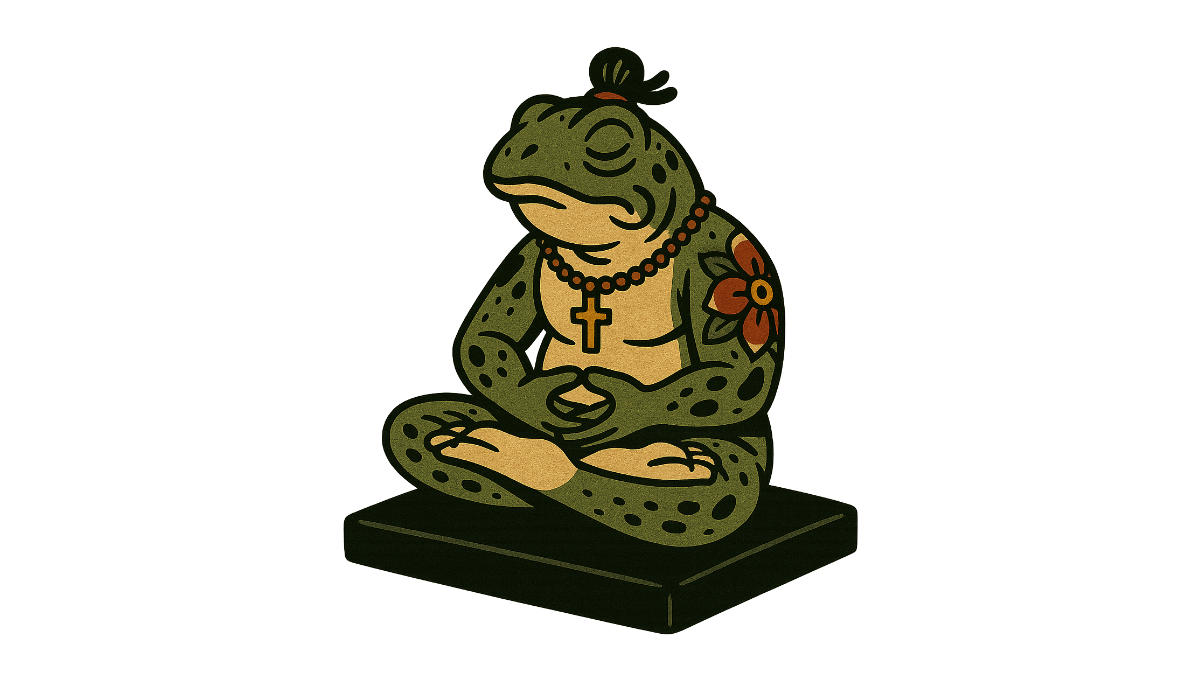
To devote oneself single-mindedly to 坐禅(Zazen: seated meditation)—the very posture itself is “the Buddha’s posture,” the posture of awakening.
After training in Song-dynasty China and returning to Japan, 道元(Dōgen) emphasized 只管打坐(Shikantaza: just sitting) and “every single gesture of daily life is the Buddha Way,” and he designated everyday actions such as cooking, cleaning, and farm work as 作務(Samu: work practice), placing them at the core of practice.
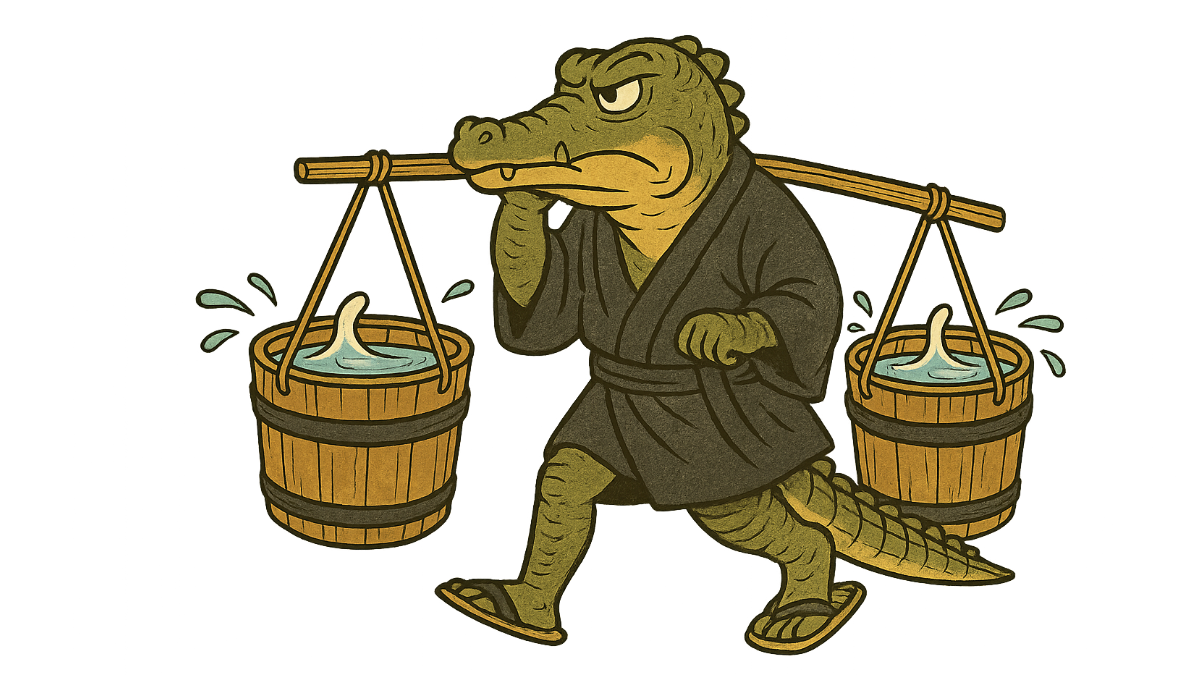
They are positioned as practices just as important as 坐禅 and 読経(Dokyō: sutra chanting). We will introduce Samu in the next blog post.
Now, about 只管打坐: in Japanese, 只管(Shikan) means “single-mindedly/just,” and 打坐(taza) means “to sit in zazen.” In other words, Shikantaza is the teaching “just sit single-mindedly.”
Why does “not thinking about anything and just sitting” become Zen practice?
Try this: when you sit on a chair and close your eyes, we inevitably start thinking:
“What should I eat tonight?”
“What will I do on my next day off?”
“What was I doing last Christmas?”
These kinds of extra thoughts are called 雑念(Zatsunen: wandering thoughts).
When vision is blocked, attention gathers in hearing: phone notification sounds, a habitual YouTube stream in the background, cars passing outside. You notice that doing nothing—thinking nothing—and simply closing your eyes is not easy.
Dōgen taught that Shikantaza is not a means to aim at awakening or to accomplish something; rather, devoting oneself single-mindedly to Zazen—that very posture itself—is the Buddha’s posture, the posture of awakening.
Let’s try 坐禅 (a chair is fine):
Posture: Use a sitting mat or cushion to tilt the pelvis slightly forward. Let the spine extend toward the ceiling. Lightly tuck the chin. Place the hands in 法界定印(Hokkai jōin: cosmic mudra)—one hand on the other, thumbs lightly touching—in front of the lower abdomen.
Legs: 結跏趺坐(Kekka-fuza: full lotus)/半跏趺坐(Hankafuza: half lotus) are stable, but a chair is also fine (both soles on the floor; do not lean on the backrest).
Gaze: half-open eyes toward the floor 1–2 meters (3–6 ft) ahead. If closing the eyes makes you sleepy, open them slightly.
Breath: do not try to control it; allow the exhale to lengthen naturally. 数息観(Sūsokukan: breath counting) is a helper method—not Shikantaza.
Time: use 10–25 minutes as a baseline.
Place: reduce extra stimulation and keep conditions nearly the same each time (same mat, same spot, roughly the same time).
Summary and Additional Notes
- Shikantaza is not a tool for obtaining something.
- Thoughts will arise; that is not failure—notice and return.
- Hip or leg pain is not an enemy, but never continue to the point of injury.
結跏趺坐(Kekka-fuza: full lotus) — a posture in which both feet are placed on the opposite thighs, each instep resting atop the opposite thigh; legs are deeply crossed.
半跏趺坐(Hanka-fuza: half lotus) — a posture in which one foot is placed on the opposite thigh, while the other leg remains beneath.
数息観(Sūsokukan: breath-counting practice) — a meditation method that counts the breath to settle the mind and cultivate concentration; a traditional Buddhist training often used as an introductory stage of mindfulness practice.
コメント