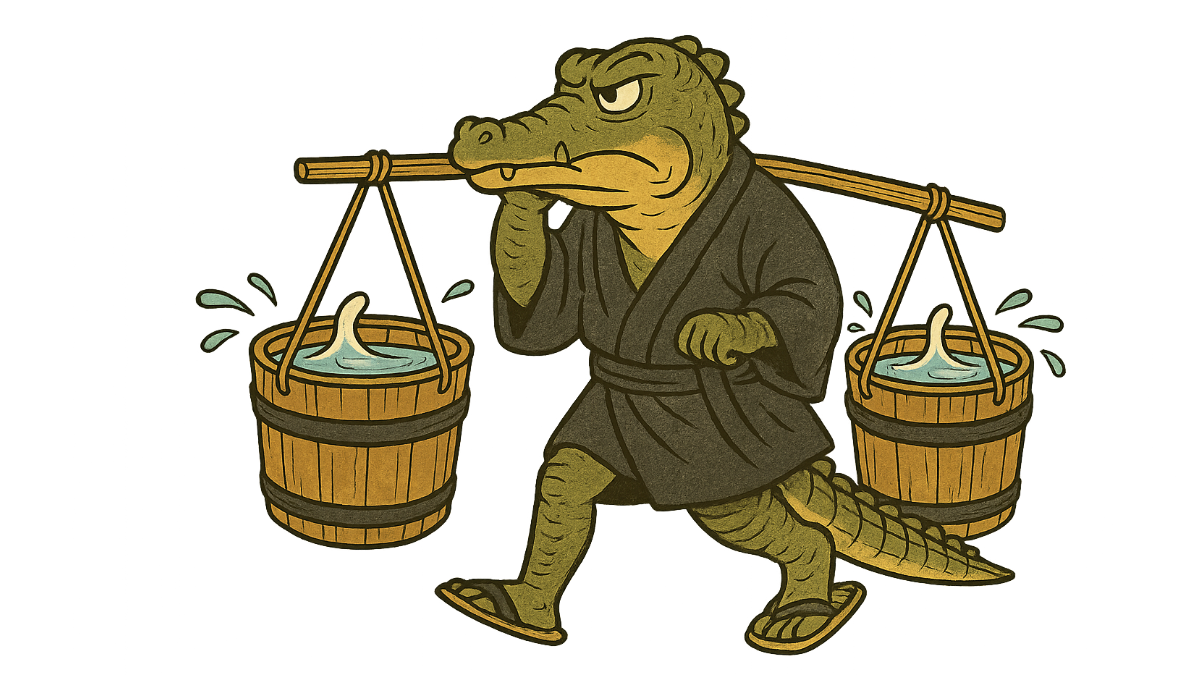
When you sit, it is zazen; when you stand, it is samu. Treat both as one practice and attend carefully to what is right in front of you, now.
In the previous post, we introduced shikantaza (“just sitting”).
Dōgen taught that “every gesture in daily life is the Buddha Way,” and he called all such actions—cooking, cleaning, and field work—samu (作務), placing it alongside shikantaza as a central practice.
Today, we look at samu.
What is samu?
Samu means doing daily tasks—sweeping, cooking, fieldwork, chopping wood, drawing water—as practice (shugyō, 修行). While many picture practice as zazen or chanting, Dōgen taught that ordinary life itself, from waking to sleeping, is a field of practice. Practice does not end when you rise from the cushion.
Three points Dōgen emphasized
- Embodiment: Line up the body before the head. Even with stray thoughts, concrete actions—sweep, wipe, cut—bring the mind back to straightness.
- Ichinyo (一如, “oneness”): Do not split work from the Way. Kitchen, garden, and corridor are themselves practice space.
- Community: Fulfilling one’s share with care steadies the whole sangha (community).
Representative forms of samu
- Cleaning (hallways, entrance, restroom): minimal tools; quiet work; neither rushed nor sluggish.
- Cooking: respect ingredients; honor knife, fire, and water; carry one flow from preparation to cleanup.
- Garden/field: work with the seasons; remove excess; supply what is lacking.
- Shinsui (薪水, “firewood & water” chores): carry, stack, put away—keep simple motions unbroken and careful.
現代の禅 (ZenNow): Five steps for home and work
- One breath to begin: straighten your back and decide inwardly, “I will do this as samu.”
- Single-tasking: one thing at a time—if sweeping, sweep; if washing, wash. Do not jump to the phone or another task.
- Honor the tools: treat rag, broom, knife, and sponge like sacred implements. Set them right before and after use; keep their places orderly.
- Quiet rhythm: value continuity over speed. If the breath turns rough, pause and take one steady breath.
- Clean close: restore the space and tools, then mark inside: “This duty is complete.”
Five-minute samu (mini menu)
- Entrance quick clean: 3 minutes sweeping, 1 minute wiping, 1 minute putting tools in order.
- One sink rack: wash → wipe → dry → line up—without breaking the flow.
- Desk reset: move items aside → wipe → return only what you keep, deciding as you go.
Common misunderstandings
- “Samu is just chores.” Drudgery appears when the aim is a result. The aim is doing this carefully now; results follow.
- “It’s a productivity hack.” Efficiency is a by-product. Hurry breeds roughness in mind and place.
- It is not a substitute for zazen. Zazen and samu are like two wheels of one cart; both are indispensable.
Summary
When you sit, practice zazen; when you stand, practice samu. Treat both as one practice and attend carefully to what is right before you, now.
Glossary
- Shikantaza (只管打坐): “just sitting” meditation; see this article.
- Shugyō (修行): disciplined Buddhist practice; by extension, devoted training in studies, arts, or demanding work.
- Shinsui (薪水): viewing “carrying firewood and drawing water” as opportunities for practice and realization.
- Ichinyo (一如): “oneness”; while appearances differ, the source is one.
- Dōgen (道元): founder of Japanese Sōtō Zen; overview here.
コメント